
Till Jasmine EPOS
UK VAT on till products
Last updated 31 August 2026. A working guide for UK venues — we will keep editing this.
Being VAT-registered does not mean 20% on everything
If the company is VAT-registered in the UK, you charge VAT at the correct rate for each product and how it is sold. You can usually reclaim VAT on your own business purchases. That is not the same as putting the whole till on 20%.
Till Jasmine lets you set 20%, 5%, or 0% on each product. Set the rate that applies to that item.
Cost price is a separate question — does EPOS cost price include VAT?
What each till rate is for
| Rate | Typical pub, restaurant, or hotel till |
|---|---|
| 20% | Eat-in meals, alcohol, most soft drinks, crisps, sweets, ice cream, hot takeaway |
| 5% | A small set of reduced-rate items. Check current HMRC rules before you use this — it is not the everyday hospitality rate. |
| 0% | Most cold takeaway food (for example a cold sandwich to go), newspapers, and some other zero-rated goods |
Exempt is different from 0%. Exempt supplies (some insurance or postage, for example) rarely appear on a hospitality till. Do not use 0% as a stand-in for “no VAT” unless the item is actually zero-rated.
Eat-in versus takeaway
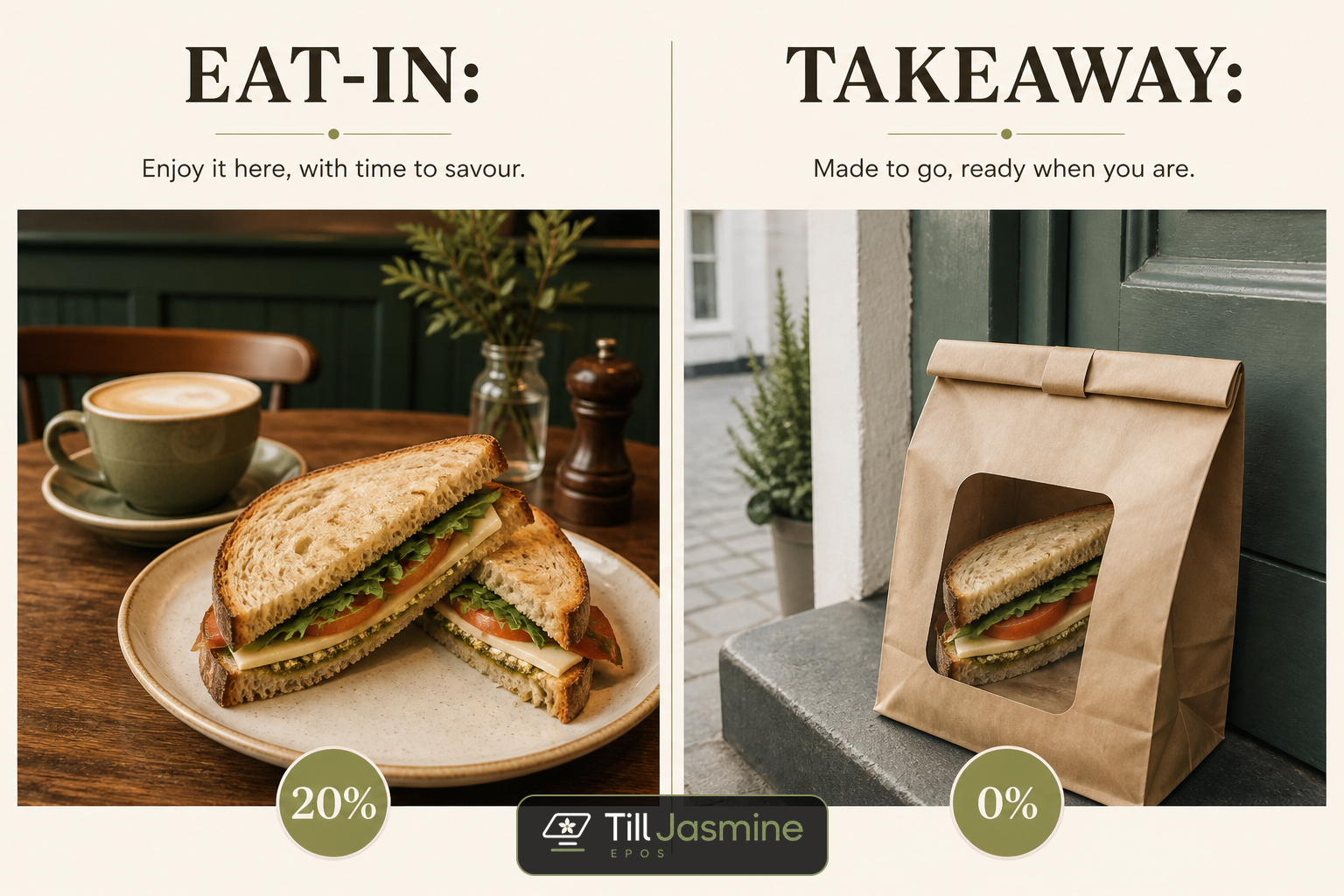
The same food can change rate depending on how you sell it. A cold sandwich eaten in is usually catering at 20%. The same sandwich taken away cold is often 0%.
A hotel restaurant or bar selling burgers, steaks, Pepsi, draught beer, and spirits for consumption on site is usually all 20%. That is the correct setup, not a mistake.
Table bills are not VAT invoices
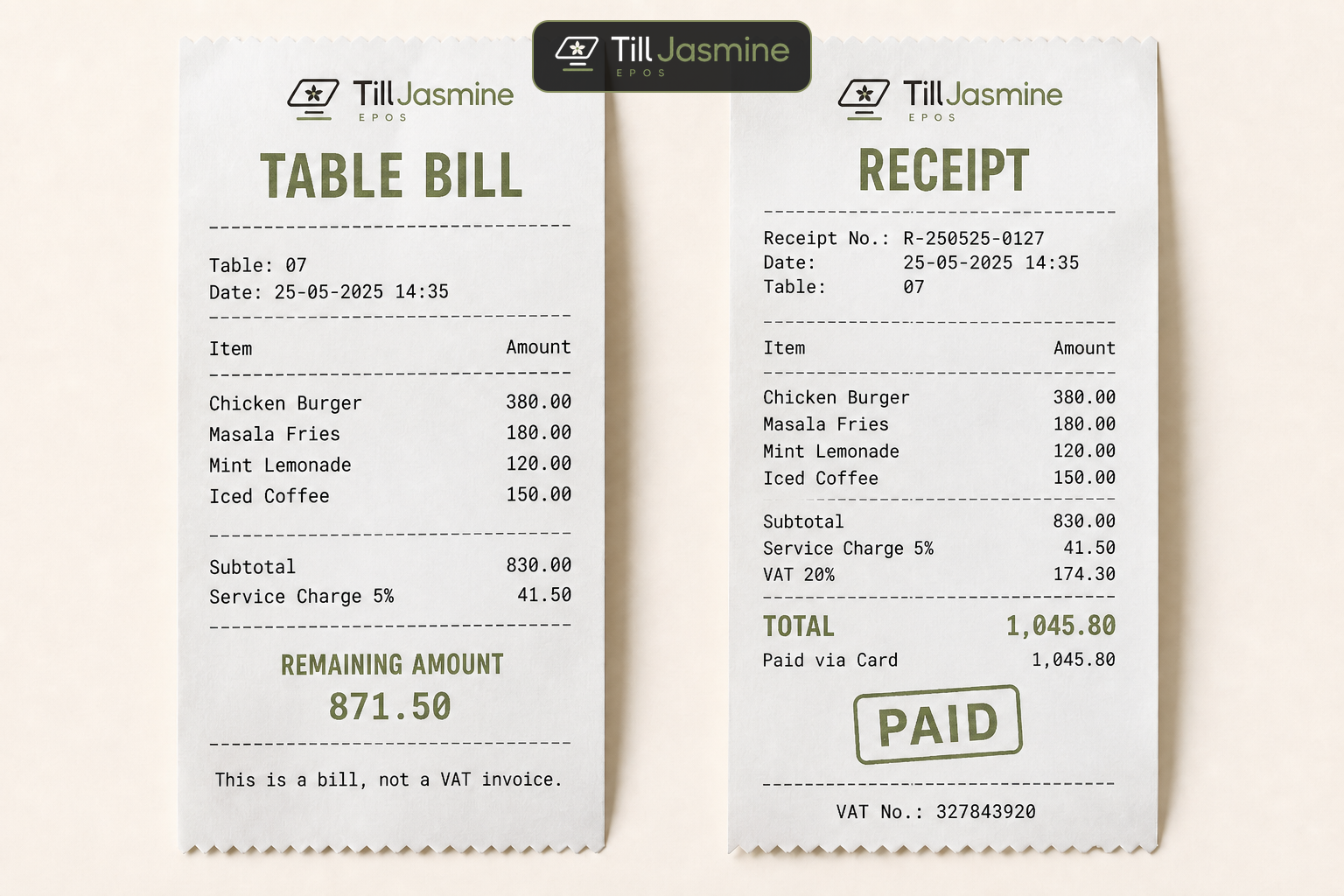
An unpaid table bill is a request for payment. It should say it is a bill, not a VAT invoice. Customers cannot reclaim VAT from it, and issuing it does not by itself create a VAT tax point.
After they pay, the receipt is the VAT document for the books. If you labelled an unpaid bill as a VAT invoice, HMRC can treat that invoice date as the tax point and you may owe that VAT even if they never pay.
What a company needs on a VAT receipt
Pubs and hotels are retailers. You do not have to give every walk-up guest a full VAT invoice. You need one if they ask, or if they are VAT-registered and want to reclaim tax.
For most till sales of £250 or less including VAT, a simplified receipt is enough. It should show:
- your name, address, and VAT number
- the time of supply
- what they bought
- the total including VAT
- for each VAT rate used, that rate and the total at that rate
If the sale is over £250 and they ask for a VAT invoice, they need a full invoice: unique number, their name and address, each line with quantity, net amount and rate, plus net total and VAT in sterling.
Official guidance
This page is a working guide for Till Jasmine EPOS users. It is not tax advice. A venue’s accountant should confirm anything unusual — mixed eat-in and takeaway, children’s meals, or reduced-rate items.